

You can’t go wrong with either, but understanding the key differences will make your choice between Dutch oven brands a lot easier.
You can’t talk about premium cookware brands without mentioning two of the most well-known makers: Staub and Le Creuset. Both brands have been around for decades and established dedicated fan bases — but their products aren’t identical.
Both Staub and Le Creuset are best known for a signature piece of cookware, the Dutch oven. As a trained chef and recipe developer, I’ve tested and regularly use Dutch ovens of various sizes, Staub and Le Creuset included. I’ve used their signature pieces both at home and in professional kitchens, and there’s a lot to love. But for someone trying to choose which brand to invest in, it can be hard to spot the differences between the two on the surface.
To help you make your choice, I’m digging into what distinguishes Staub and Le Creuset’s signature products. If you’re looking to invest in a new, premium-quality kitchen staple, here’s what you need to know about Staub vs. Le Creuset Dutch ovens.
TL;DR
- Le Creuset boasts more lightweight pots, extensive color options, and light-colored interiors that allow you to monitor your cook
- Staub dominates when it comes to professional-grade performance, self-basting technology, and superior heat retention
- Both brands offer lifetime warranties and are backed by decades of reliable cooking performance
- Le Creuset Dutch ovens cost between $270-780+, while Staub ranges from $100-500+
- Your choice will ultimately come down to your cooking style and preferences: visual monitoring vs. professional features
| Criteria | Le Creuset | Staub | ||||
| Weight (for the 5.5-qt size) | 11.5 lbs | 12.57 lbs | ||||
| Interior Surface | Light enamel (shows stains, but easier to monitor your food as it cooks) | Matte black (hides stains) | ||||
| Lid Design | Traditional domed | Self-basting with spikes | ||||
| Heat Retention | Excellent | Superior | ||||
| Durability | High-quality enamel | High-quality enamel | ||||
| Color Options | 20+ vibrant colors | Fewer, sophisticated tones | ||||
| Price Range | $270-780+ | $100-500+ | ||||
| Best For | Home cooks, visual monitoring | Professional performance | ||||
Table of Contents
Choosing a Premium Dutch Oven Isn’t as Simple as It Looks
Buying a Dutch oven sounds straightforward, until you start comparing your options. High-quality Dutch ovens are designed to last decades, but they aren’t cheap — so you want to make sure you’re making the right investment.
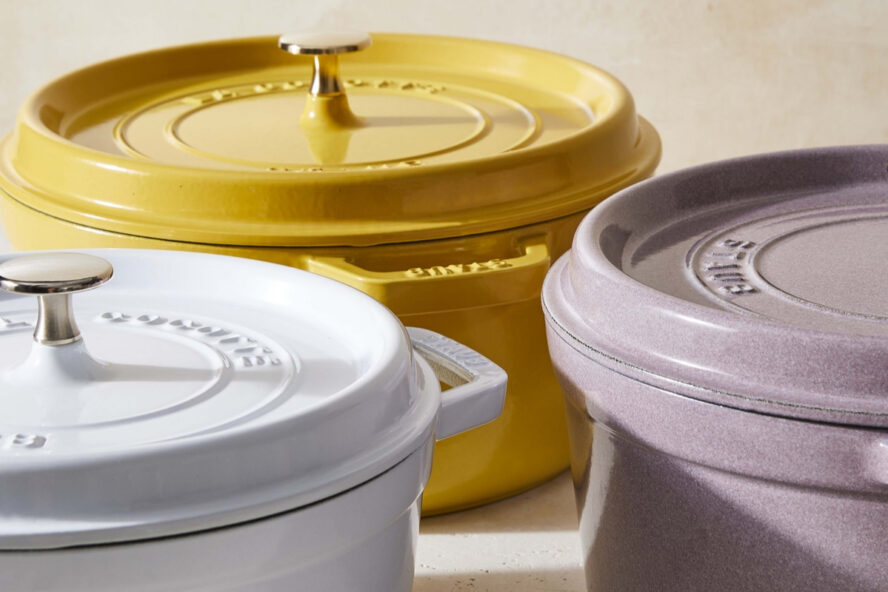
The challenge is that most high-end Dutch ovens look similar on the surface, including products from legacy brands Staub and Le Creuset. Staub and Le Creuset have pretty much cornered the market on premium Dutch ovens, both offering similar-looking enameled cast-iron products at comparable price points.
Why Staub and Le Creuset Are Often Compared
From there, Staub vs. Le Creuset is a natural comparison because they have similar reputations when it comes to longevity, performance, and craftsmanship. They’re both iconic French brands with rich histories of producing high-quality enameled cast iron pieces. Le Creuset has a 100-year history of producing their signature enameled cast iron cookware. Staub was founded about 50 years later in 1974, but they quickly made a name for themselves producing their own iconic French Dutch oven pieces. These days, both brands use non-toxic materials (so you don’t have to worry about leaching chemicals).
These similarities can easily muddy the waters of your decision. Dig a little deeper, however, and you might find that their surface-level similarities are masking notable differences when it comes to the firsthand cooking experience.
The Wrong Dutch Oven Can Affect How Often You Cook
If you’re an avid home cook (or aspire to be one), the Dutch oven you choose will affect how your meals turn out and, if we’re being honest, whether you reach for it at all. It isn’t just about Le Creuset vs. Staub, it’s about your personal preferences. Weight, interior color, material, lid design, and heat behavior all affect how comfortable you are with the pot.
If you find the pot too heavy, difficult to clean, or just cumbersome overall, you might end up leaving it to gather dust. Given how incredibly versatile Dutch ovens are, that would be a real shame. I use mine for baking bread, braising party-ready cuts of meat, and even making eggy casseroles for brunch.
Criteria Breakdown
To assess Le Creuset vs. Staub, I’ve focused on seven key factors that matter most when choosing a Dutch oven. Weight addresses daily handling, interior surface impacts cooking visibility and ease of maintenance, lid design influences moisture retention, heat properties affect cooking performance, durability determines longevity, aesthetics matter for kitchen coordination, and value covers the long-term return on your investment.
Both Le Creuset and Staub Dutch ovens have their individual strengths, so it’s worth assessing what’s most important to you out of these factors.
Le Creuset
What Le Creuset Is Best Known For
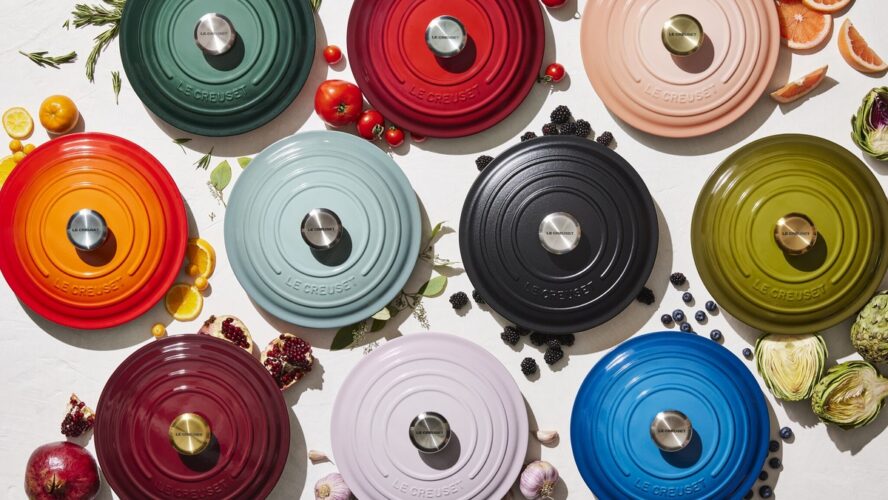
Over the past 100 years (they were founded in 1925!), world-renowned French brand Le Creuset has built a reputation for making lighter-weight cookware in iconic shapes and beautiful colors. Previous high-quality cast iron cookware was utilitarian and blah. Le Creuset introduced vibrant, showpiece-worthy pots that became the centerpiece of the kitchen. They made premium cookware both functional and attractive for home kitchens, making aesthetics an essential consideration in the cookware category.
Really, Le Creuset was the first to make a pot that you’d want to display on the stove at all times, even if you never cook. And although aesthetics were finally being celebrated, the brand never skimped on quality craftsmanship or practical design elements.
Le Creuset’s commitment to lighter construction and large, ergonomic handles also makes its Dutch ovens more accessible for everyday cooking. You won’t struggle to transfer a full pot from the stovetop to the oven or the dining table, which matters if you’re throwing together a quick one-pot dinner on borrowed time.
Features
I love that the smooth, off-white enamel interior of Le Creuset Dutch ovens enables simple cleaning with warm, soapy water and a sponge. It will show stains more readily than darker surfaces, but it’s a worthwhile trade that allows you to easily peek how your food is changing in the pot. You can watch as your onions sweat and soften or your beef ribs take on a golden caramelization (so you can stop cooking before it turns from browned to charred).
The pot handles are wide and easy to grip for comfortable and safe maneuvering, and lids on newer Le Creuset Dutch ovens feature oven-safe, stainless steel knobs. The lids are gently domed, which helps steam condensate and lock your flavors in.
As we’ve mentioned, these Dutch ovens are lighter than most, and that makes a big difference — if you’re taking full advantage of your kitchen staple, you’ll notice. Many of the best Dutch oven recipes start on the stove and finish in the oven, so you’ll be moving it around a lot. And with a great-looking pot like one from Le Creuset, you’ll even want to bring it to the table to serve family-style. The lighter the pot and the easier it is to grip, the easier all of this becomes.
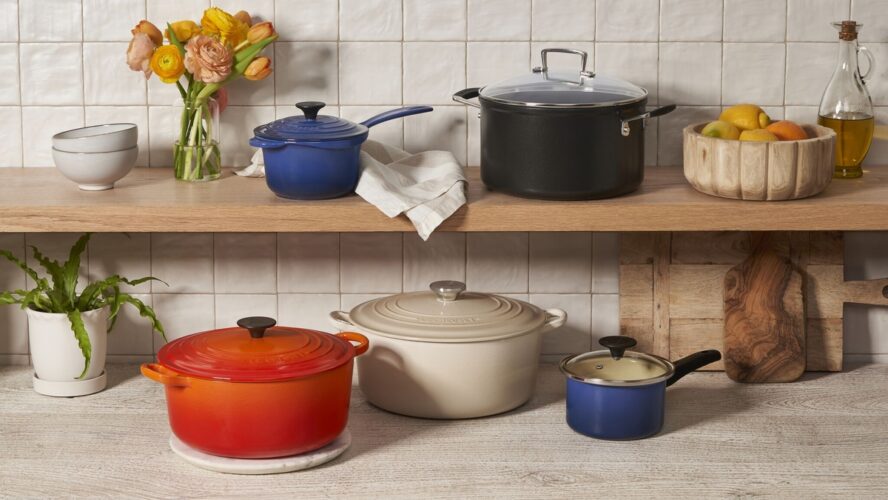
The brand’s extensive color palette includes over 35 options with frequent new releases, so there’s sure to be a colorway to fit your aesthetic.
Finally, I love that the Le Creuset Dutch oven has excellent heat distribution. The pot doesn’t have prominent hot or cold spots, which means you get even, uniformly browned results on foods like steaks. This is also my go-to pot for soups and sauces that simmer for hours. It retains heat well, so it’s easy to maintain a simmer for slow-cooking, and the light interior gives me a better view of my sweating mirepoix so I can avoid burning.
| Pros | Cons | ||||||
| Lighter weight construction, easier to lift | Light interior shows stains | ||||||
| Light interior enamel allows better visual monitoring | More expensive | ||||||
| Large color palette | Basic lid design doesn’t include self-basting technology | ||||||
| Beginner friendly | Older models use plastic knobs with heat limits | ||||||
| Wide, easy-grip handles |
Criteria Evaluation
- Weight & Maneuverability: 4/5 – This is one of the lightest high-quality Dutch ovens available, and it makes daily use comfortable and accessible for most home cooks
- Interior Surface: 4/5 – Excellent for visual cooking, but stains more easily
- Lid Design: 3/5 – Traditional design works, but lacks self-basting technology
- Heat Retention: 4/5 – Solid cast iron performance with even heat distribution across the cooking surface
- Durability: 4/5 – High-quality enamel resists chipping with proper care, backed by lifetime warranty
- Aesthetics: 5/5 – Industry-leading color options and matching accessories for complete kitchen coordination
- Value: 3/5 – Premium pricing reflects brand positioning, but may not justify the cost
Community Reviews
Home cooks consistently praise Le Creuset Dutch ovens for their ease of use and beautiful aesthetics, though some mention that the interior picks up stains over time. Many reviewers mention receiving a Le Creuset pot as a wedding gift that lasts for decades (sometimes even longer than the marriage!). Professional chefs report that the lighter weight is a significant advantage for daily cooking and long hours, while long-term users appreciate the lifetime warranty support.
Price
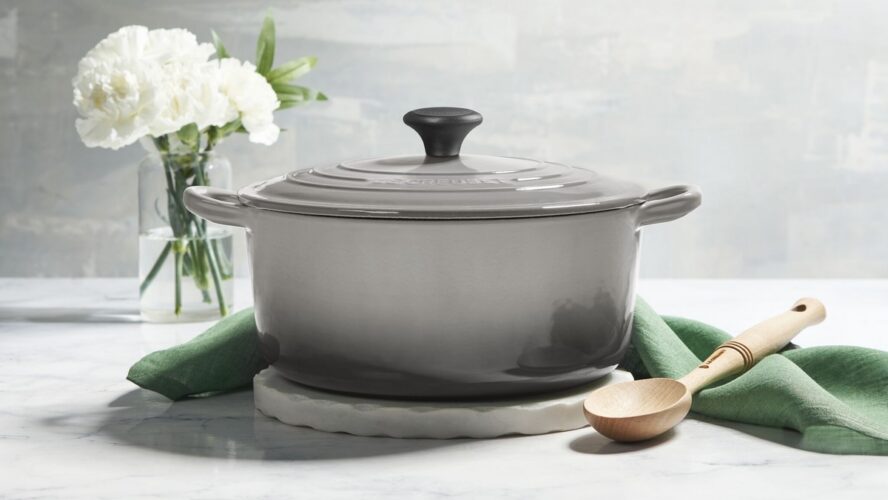
Le Creuset Dutch ovens range from $270 to $780, depending on the size and color. Limited edition colors command premium pricing, while signature shades offer a better value.
- Le Creuset Signature Enameled Cast Iron Round Dutch Oven (from 2 qt to 13.25 qt): $270 – $650
- Le Creuset Signature Enameled Cast Iron Oval Dutch Oven (from 5 qt to 15.5 qt): $415 – $780
You can purchase Le Creuset directly through their site.
Staub
What Staub Is Best Known For
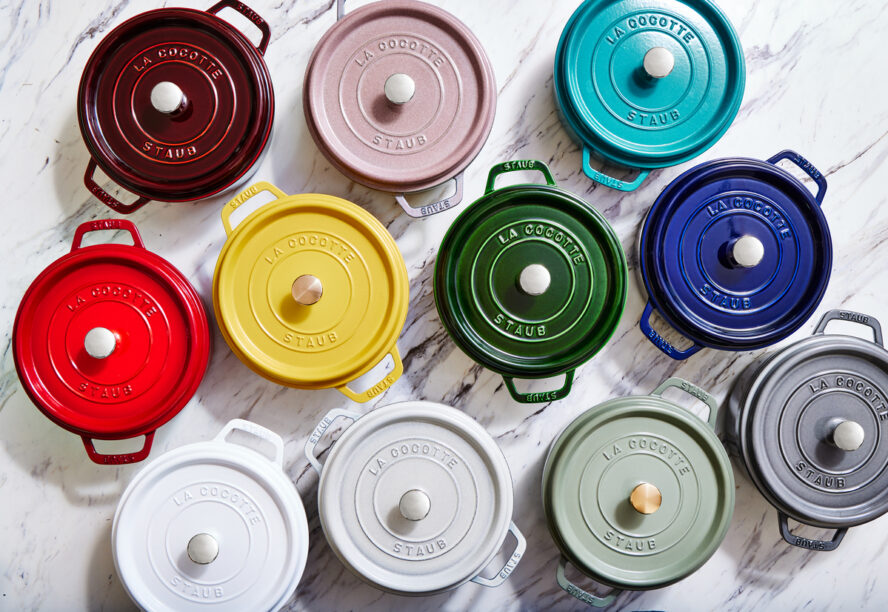
Staub, another French-founded brand that’s now owned by the German company Zwilling, has a reputation for professional-grade performance and innovation. Staub prioritizes functionality over aesthetics in its cookware, and you’ll often find Staub Dutch ovens stacked high in professional kitchens. Chefs love the cookware’s durability, heat consistency, and the reliable results you get from the matte black interior.
Features
Staub Dutch ovens have a matte black enameled interior with a subtle texture. The surface develops seasoning naturally over time with regular use, so the pan becomes more nonstick the more you cook. The textured cooking surface enhances browning when you sear meats and vegetables — all the little nooks and crannies add extra surface area for that sought-after caramelization. For that reason, my Staub is my go-to pot for searing meat before a braise.
The interior of the lid has soft spikes that allow steam to condensate and drip back into your food, in what the brand calls “self-basting technology.” This feature is great for returning flavor and moisture to braises, soups, and stews.
Staub Dutch ovens are slightly heavier than Le Creuset Dutch ovens, but that thicker cast iron translates to excellent heat retention. In my experience, the combination of the black matte surface and heavier-duty cast iron makes for better sears. Meat like short ribs and large roasts take on a crisp, caramelized crust in a Staub Dutch oven faster and more evenly than in Le Creuset. Also, the dark finish hides any stains.
While Staub doesn’t offer quite the same range of colorways, the Dutch ovens still come in a nice selection of classic, sophisticated shades.
| Pros | Cons | ||||||
| Self-basting lid traps moisture for braises and soups | Heavier | ||||||
| Stain-resistant black enamel interior | Dark interior makes it harder to visually monitor browning | ||||||
| Strong browning ability | Fewer color options, but still gorgeous | ||||||
| Professional durability | Superior heat retention causes a slight learning curve, as your food may cook faster than a recipe suggests | ||||||
| Slightly cheaper |
Criteria Evaluation
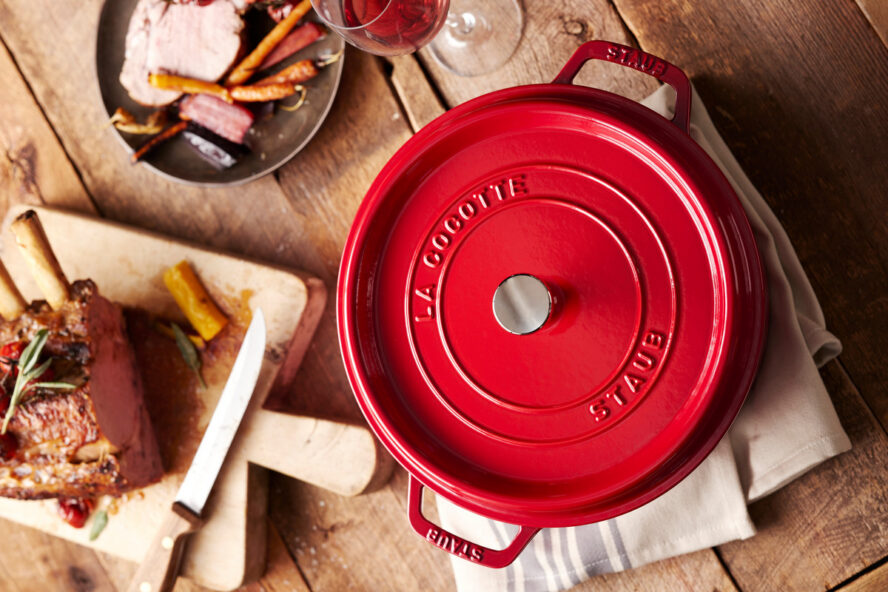
- Weight & Maneuverability: 4/5 – The heavier construction of the Staub Dutch oven requires more effort, but it also gives the piece a nice heft
- Interior Surface: 5/5 – Matte black enamel hides stains while developing improved nonstick properties over time
- Lid Design: 5/5 – Self-basting technology with condensation spikes for better moisture retention
- Heat Retention: 5/5 – Heavier cast iron provides exceptional heat retention and distribution
- Durability: 5/5 – Professional kitchen-tested enamel withstands high use, backed by a lifetime warranty
- Aesthetics: 3/5 – Muted color palette appeals to serious cooks, but offers fewer options than competitors
- Value: 4/5 – Professional features at a slightly lower price means excellent long-term value
Community Reviews
Professional chefs often prefer Staub Dutch ovens for their cooking performance and durability. Home cooks appreciate the self-basting technology for slow-cooked dishes, as well as the stain-hiding interior. Many reviewers emphasize the learning curve of a heavier pot (especially if they regularly cook recipes that go from the stove to the oven or vice-versa), but agree that the pot delivers exceptional results once you get the hang of it.
Price
Staub Dutch ovens range from $100 to $500, depending on size.
- Staub Enameled Cast Iron Round Dutch Oven (4 to 9 quarts): $299 – $500
- Staub Mini Round Dutch Oven (0.275 quart): $99.99
- Staub Enameled Cast Iron Wide Oval Dutch Oven (6.35 quarts): $450
You can find Staub at Zwilling.
Frequently Asked Questions
Newer cooks may prefer Le Creuset Dutch ovens because they’re lighter, easier to maneuver, and the light-colored enamel interior gives you more visual cues about how your steak is searing or your onions are softening. The more manageable weight and visual feedback can help teach beginner chefs cast iron cooking techniques.
Both brands offer lifetime warranties and the pots will last decades with proper care. And I mean it when I say decades — I still use the 2-quart Le Creuset Dutch oven that my grandmother received as a wedding gift! Sure, the interior has a bit of a patina, but it works just as well now as when she got married, and it’s the perfect size for two.
In short, yes. The premium for both Staub and Le Creuset cookware pays off through superior cooking performance, durability, and lifetime warranties. We’ve tried the cheaper knock-off versions, and the poor craftsmanship means they end up chipping in as little as a year before getting recycled. If you consider how much you’ll use these pans over decades, a premium Dutch oven likely costs less than replacing cheaper alternatives several times.
Yes, both Staub and Le Creuset work great on induction cooktops. Cast iron is magnetic, so it’s highly responsive to the cooking surface.
Be sure to use the right cooking oil to keep your new Dutch oven in good shape and avoid stains.
Final Thoughts: Which One Is Worth It?
Both Staub and Le Creuset Dutch ovens are great investments in your future as a home cook, regardless of your skill level. But between the two, your ideal Dutch oven will depend on your personal cooking style and kitchen priorities.
Choose Le Creuset if you value lighter weight for daily handling, prefer to be able to monitor your food as it cooks, or want the perfect shade to coordinate with your kitchen aesthetic.
Go for Staub if you prioritize professional-grade performance, superior moisture retention, and don’t mind a slightly heavier pot. It’s also a good choice if you want the slight edge when it comes to searing.
Whichever pot you choose in the battle of Staub vs. Le Creuset Dutch ovens, it’s a guaranteed investment in a quality piece of cookware that will last for generations. A Dutch oven is a workhorse you’ll rely on for years when making soups, stews, braises, sears, and even boiling pasta or rice.
Now the only question is: what’s for dinner?
The post Staub vs. Le Creuset Dutch Oven: Which One Is Best for Your Cooking Style? appeared first on Organic Authority.
Source link